Skip to content


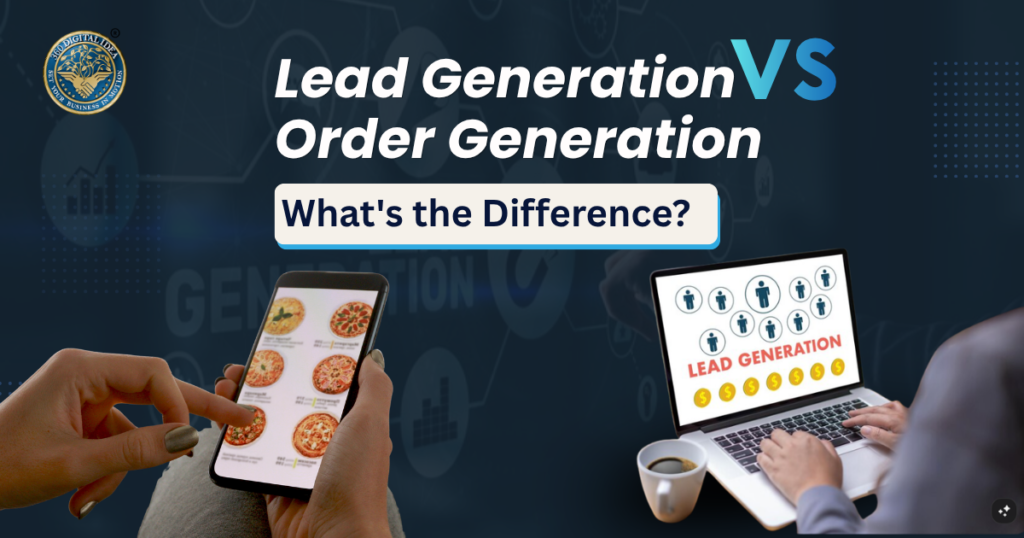
This blog explains lead generation vs order generation in simple words. A lot of people search for what order generation is and how it is different from getting leads, so I start with that. Then I cover when to use order generation, a few lead generation strategies for small businesses, and what order generation services usually include.
The Short Answer:
Lead generation means getting contact details from people who seem interested in what you sell, then following up. Order generation means trying to get the person to place an order directly. That is the main difference between lead generation and order generation. The ads and landing pages can look almost the same, but what happens after the click is different.
With a lead, the sale usually comes after a call, a quote or a visit. With an order, the person buys on the page, in a chat, or after a quick call.
What Is Lead Generation?
Lead generation is getting people who may buy to share their name, phone number or email. Then someone from your team contacts them and tries to turn the enquiry into a customer.
Real estate agents, coaching institutes, dentists and B2B software companies mostly work like this. Nobody buys a flat after seeing one ad. They fill a form, talk to someone, think about it for a while and then decide.
What Is Order Generation?
Order generation is marketing that tries to get the purchase itself. You want the order, not just an enquiry. It could be someone buying a kurta from a D2C store, a restaurant getting online orders, or a retailer sending a bulk purchase order after looking at your catalogue.
People use the term in two ways. Some mean direct purchase orders in e-commerce, D2C and B2B. Others mean marketing made for quick sales, where the person sees an offer and buys without waiting for a sales call. The two overlap quite a bit, so I have kept them together in this blog.
Lead Generation vs Order Generation Side by Side:
| Point: | Lead generation: | Order generation: |
| What do you get? | An enquiry with contact details | A placed order |
| Buyer stage | Still deciding | Ready to buy |
| Time to sell | Days to months | Minutes to a few days |
| Follow-up | Needed (calls, email, WhatsApp) | Mostly order updates |
| Main numbers | Cost per lead, lead quality | Cost per order, return on ad spend |
| Works best for | Services and costly items | Products with a clear price |
| Common problem | Leads that never become sales | People leaving the cart |
Why People Mix Them Up?
Both start with an ad or a search result, and both show up as a number in a report. Many agencies also call both a “conversion”. A form fill is a conversion, and a purchase is a conversion, but a form fill is worth a lot less until someone closes it.
I often see business owners count leads as if they were orders. If you got fifty leads and only five got a proper callback, the real number is much smaller than fifty.
When to Use Order Generation (and When Not to)?
When to use order generation mostly depends on the product. It works well if:
- The product has a clear price, and people can decide quickly, like clothes, skincare, snacks or accessories
- People can buy without talking to anyone.
- Your product pages, checkout and delivery already work.
- People buy the same thing again after some time.
It doesn’t work well if the price is high, the service needs a custom quote, or people want to meet you first. A modular kitchen or a college admission is hard to sell with a buy now button.
When Lead Generation Makes More Sense?
Lead generation is better when people need time to think. Real estate, education, healthcare, law, interior design, B2B services and custom manufacturing are all like this. The first goal is to start a conversation, because people want to trust you before they pay.
Reply time matters a lot here. One widely quoted study of web leads found that companies who contacted a lead within an hour were about seven times more likely to qualify it than companies who waited even one more hour. So getting the lead is only part of the work. How fast you reply decides a lot of what happens next.
A Hypothetical Example:
These numbers are made up, just to show how it works.
Take a small interior design studio and a small home decor brand. Both run Meta Ads for one month. The studio gets 60 enquiries and calls all of them. 12 people agree to a site visit, and 3 sign a project. The decor brand gets 130 people who add something to the cart, and about 40 of them complete the purchase.
The studio checks the cost per signed project and how fast it calls back. The brand checks the cost per order and how many people came back to finish their cart.
Lead Generation Strategies for Small Business:
You don’t need a big budget for these. Here are the ones that usually work first:
- Google Business Profile and local SEO, because people who search “near me” are often ready to call
- A simple landing page with one offer, a short form of three or four fields and a phone number people can see
- Click-to-WhatsApp and call buttons, since a lot of people would rather send a message than fill a form
- Search ads and Meta lead ads for one specific service, not very broad terms
- Blog posts that answer the questions people ask before they enquire
- Asking past clients for referrals, which costs almost nothing
- A simple rule that every lead gets a reply within an hour
At 360 Digital Idea, our lead generation work covers landing pages, ad copy, lead qualification, CRM follow-up and regular reports. A small team doesn’t have to set all of this up alone.
What Order Generation Services Usually Include?
Good order generation services try to get the purchase done, not only the click. Most of them include:
- Product feeds and catalogue or shopping ads
- Google and Meta campaigns made to get purchases
- Checking the product pages and the checkout steps
- Showing ads again to people who left items in the cart
- Tracking orders, cost per order and return on ad spend
Cart abandonment is the main reason that last point matters. Benchmark data for 2026 shows an average of around 70%, which means about seven out of ten online carts never become orders. Fixing the checkout and bringing those people back often gives quicker results than paying for more traffic.
Our order generation services are part of our performance marketing and ecommerce PPC work, and we add conversion optimisation and clear reports to it.
Numbers to Track for Each One:
| What to watch? | Lead generation: | Order generation: |
| Cost | Cost per lead, cost per qualified lead | Cost per order |
| Quality | Share of leads that become customers | Share of carts that become orders |
| Speed | Time taken to reply | Page and checkout speed |
| Return | Revenue per closed lead | Return on ad spend |
Mistakes we See Often:
- Going for the cheapest leads, which are often the weakest
- Using a buy now approach for something people need to understand first
- Sending ad traffic to the homepage and not a page made for that offer
- Having nobody responsible for calling new leads
- Looking at clicks and impressions instead of leads or orders
Which One Should You Pick?
Ask yourself three things. Can a stranger buy from you without talking to anyone? Is the price clear and fixed? Do people buy this on impulse, or do they think about it for weeks?
If the answers are yes, yes and impulse, go with orders. If they are no, no, and weeks, go with leads. A lot of businesses need both. A lab equipment supplier, for example, could use lead generation to find new buyers and order generation to get reorders from buyers who already know the items.
If you are not sure, we at 360 Digital Idea start by looking at your product, your price and how people buy from you right now. Then we suggest one of the two or a mix.
Conclusion
If you came here wondering what order generation is, it is the part of marketing that brings in people who are ready to buy, while lead generation brings in people who might buy later. Once you know which one fits your product, it is easier to look at the right numbers and spend on the right campaign.
If people need trust and a conversation before buying, lead generation is usually the better choice. If the price is clear and the decision is quick, you now know when to use order generation. And if you have a small team, you can start with a few lead generation strategies for small businesses, like a simple landing page, WhatsApp buttons and a quick reply to every enquiry.
FAQs
Q1. What is the main difference between lead generation and order generation?
Lead generation collects people who are interested so you can follow up with them later. Order generation tries to get the purchase itself.
Q2. What is order generation in simple words?
It is marketing that gets people to place an order directly. That can be a shopper on an e-commerce site or a business sending a purchase order.
Q3. Is order generation only for e-commerce?
No. Ecommerce and D2C brands use it the most, but restaurants, retailers and B2B sellers with clear catalogues and prices use it too.
Q4. When to use order generation instead of lead generation?
Use it when the price is clear, the decision is quick, and people can buy without a call. If buyers need a quote or a meeting first, lead generation is a better fit.
Q5. Which lead generation strategies for small business work best?
A simple landing page, a Google Business Profile, click-to-WhatsApp buttons, search ads for one specific service and a quick reply to every enquiry. Start with one or two and add more later.
Q6. Can I run lead generation and order generation together?
Yes. Many businesses get a customer through a lead and then get repeat orders from the same person.
Q7. Why do I get leads but no sales?
Most of the time, it is slow follow-up, the wrong audience or a form that lets anyone in. Check how fast you reply and how many leads are real buyers before you spend more on ads.
Q8. How do I measure order generation services?
Look at cost per order, return on ad spend and the share of carts that become orders. Clicks and traffic alone don’t tell you if it is working.