Skip to content

Think about the last time you needed a doctor for something that wasn’t your usual one. Maybe it was late at night, maybe your regular clinic was closed, or maybe you just moved to a new area and didn’t know anyone yet. What did you do? You probably picked up your phone and typed something like “best dental clinic near me” into Google. You didn’t call a friend first. You didn’t check a phone book because nobody has used one in years. You just searched, scrolled for a few seconds, and picked one of the first few results that looked decent.
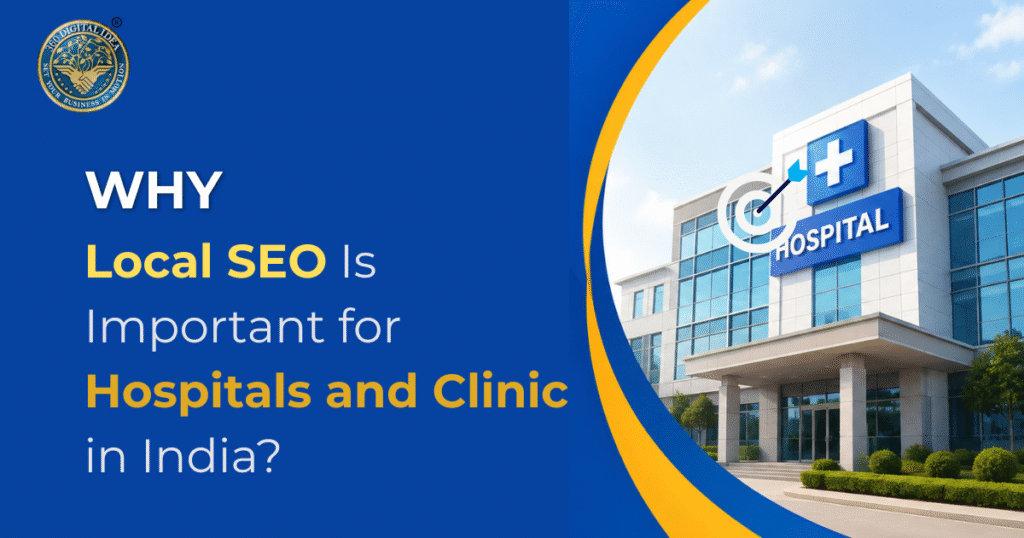
That’s basically how almost every patient in India behaves now, and it’s why local SEO for hospitals and clinics in India has stopped being some optional extra thing marketing agencies talk about. It’s become the actual front door to your practice. More than 77% of patients are already searching locally for healthcare services, which is a huge number when you really sit with it, and it means a strong local presence isn’t a nice-to-have anymore. It’s basically survival. Maxsdigit
We want to walk you through this properly. Not just throw stats at you and call it a day, but actually explain why this matters, what’s happening behind the scenes when patients search, and what you can realistically do about it even if you’re running a single clinic with two staff members and no marketing department.
So what exactly is local SEO?
In simple terms, local SEO is everything you do to ensure your hospital or clinic shows up when someone nearby searches for the kind of care you offer. That includes your Google Business Profile, your website, the reviews patients leave, and your listings on places like Practo, Justdial, and Sulekha. It also includes something boring but important, which is making sure your clinic’s name, address, and phone number look the same everywhere they’re listed online.
It’s not the same as normal SEO where you’re trying to rank for the whole country or even globally. Local SEO is narrower and, honestly, a lot more useful for a hospital. You’re not trying to beat AIIMS Delhi for some broad search term. You’re trying to be the answer when someone three kilometres away searches “orthopedic clinic near me” at nine in the evening.
How many people are actually searching before they walk in?
This is the part that tends to catch hospital owners off guard, especially the ones who’ve been running their practice for fifteen, twenty years on word of mouth and reputation alone. The numbers are not small. Around 78% of patients in India search online before they choose a hospital or doctor, and 77% of patients start their whole healthcare journey by typing something into a search engine. Another report came across that put the figure a touch lower but still in the same range, saying more than 70% of Indian patients search online before picking a hospital or clinic, and most of them end up preferring a provider that’s within 5 to 10 km of where they live.
So no matter which exact number you trust more, the pattern doesn’t change. Most of the people who will eventually become your patients are already on Google before they ever call your reception desk. If you’re not showing up there, in their eyes you basically don’t exist, even if your hospital has been the most trusted name in the neighbourhood for two decades. That trust built offline doesn’t automatically transfer online, and that’s the uncomfortable truth a lot of established hospitals are slowly learning.
There’s also a bigger money story here that’s worth knowing, even if it feels a bit removed from your day-to-day work. India’s healthcare digital market was valued at 14.5 billion dollars in 2024, and it’s expected to grow to nearly 107 billion dollars by 2033. That’s not a small bump. That’s a market that’s about to get seven times bigger in less than a decade. Whatever share of that you’re not capturing right now, someone else is going to grab it instead, probably a competitor with a better Google listing than you
The little map box at the top of Google matters more than your whole website

Here’s something a lot of clinics don’t realize until someone points it out to them. When a patient searches “hospital near me” or something specific like “cardiologist in Vashi Navi Mumbai,” Google shows a small box right at the top with a map and three listings underneath it. This is called the local pack, and for a hospital trying to bring in patients, this little box is basically the most valuable real estate on the entire internet.
For hospitals trying to get OPD patients through the door, the Google Maps local pack is the single most valuable digital space, because patients searching for a hospital near me or a specialist clinic in their area will see the top three Google Business Profile listings before they see any actual website results. Read that again slowly. Before your website. Before your beautifully designed homepage with all your doctors’ photos and qualifications and that nice “Our Story” section someone spent weeks writing. Patients see those three map listings first, and a huge chunk of them never scroll past that box at all. ICONIX
This is exactly why your Google Business Profile can’t be something you set up once in 2019 and forgot about. It needs to be treated like the actual entrance to your hospital, because for a lot of patients, that’s exactly what it is.
Reviews are quietly running the show
I think a lot of hospital owners still see patient reviews as a nice ego boost, something you screenshot and maybe put on Instagram once in a while. But reviews have become one of the strongest ranking signals there is for local search, and they’re directly shaping whether a patient picks you over the clinic two streets away.
Patient reviews are the strongest signal for healthcare local pack rankings, and they shape patient decisions just as directly, since 87% of patients read reviews before they even choose a doctor. Eighty-seven percent. That’s not a minority behaviour anymore; that’s almost everyone. VGraple
And it’s not only about having reviews sitting there. It’s about how fresh they are. Thirty recent reviews collected over six months will actually outperform two hundred old reviews when it comes to local ranking, because recent and active reviews signal to Google that the practice is genuinely active right now, not just coasting on old reputation.
Now here’s the part that should really grab your attention if you run a hospital. Star rating isn’t just a vanity number; it has a real, measurable effect on revenue. A single one-star increase in rating can lift healthcare revenue by 5 to 9 percent, according to Harvard Business Review. Another study found something pretty similar from a slightly different angle. Healthcare providers rated below 4.2 stars on Google see noticeably weaker inquiry-to-appointment conversion compared to providers above 4.5 stars, and a consistent system of post-visit review requests through WhatsApp, combined with proper responses to every single review, can shift a hospital’s overall rating in a meaningful way within just 60 to 90 days. Sunil Pratap Singh ICONIX
So this isn’t some soft, feel-good metric your marketing team mentions in a meeting. This is tied directly to how many phone calls and bookings you’re getting each month, whether you’ve noticed it or not.
Even the big hospital chains can’t skip this
You’d think a massive name like Apollo or Fortis wouldn’t need to worry about local SEO. They’re already everywhere, right? But that’s not quite how it plays out. Apollo, Fortis, and Narayana hospital chains dominate organic search for broad medical queries, but individual practitioners consistently win the local maps pack for location-specific specialist searches, with platforms like Practo helping bridge that gap. Sunil Pratap Singh
What this tells you is genuinely encouraging if you’re running a small or mid-sized clinic. You don’t need Apollo’s budget to beat Apollo. For searches that are specific to your area and your specialty, a well-optimized small clinic profile can actually outrank a giant hospital chain. Local search is one of the few places online where size doesn’t automatically win.
Platforms like Practo also play a bigger role in this whole picture than people give them credit for. Practo alone lists more than 200,000 doctors across 310 cities in India and gets a serious amount of search traffic for people trying to discover a doctor. Being properly listed there, with your details matching everywhere else and your reviews staying active, feeds right back into your overall visibility on Google too. It’s all connected, even though it might not feel that way when you’re just trying to update one profile at a time.
This isn’t only for the big hospitals; smaller clinics benefit just as much
If you’re running a smaller clinic, don’t assume this whole local SEO thing is only for the big players with deep pockets and dedicated marketing teams. Local SEO actually lets you attract nearby patients without spending heavily on ads, and studies show more than 70% of patients end up choosing clinics that appear on the first page of Google, which really drives home how important local visibility is. Shloka Solutions
For a single-doctor practice or a small diagnostic center, this might honestly be one of the only marketing channels where you can genuinely go head to head with a massive hospital chain and win, simply because Google cares more about relevance to a specific area and specialty than it cares about how big your brand name is.
A quick recap of the numbers worth remembering
Leet’s just gather the key figures in one place, because honestly they make a stronger case for local SEO than any amount of explaining I could do.
Somewhere between 70 and 78 percent of Indian patients search online before they ever choose a hospital or clinic, depending on which study you trust most. Eighty-seven percent of patients read reviews before settling on a doctor. A single one-star jump in your rating can raise revenue by 5 to 9 percent. Practo alone has over 200,000 listed doctors all competing for the same searches you’re trying to win. And India’s healthcare digital market is set to grow from 14.5 billion dollars to close to 107 billion dollars within less than ten years.
None of these are small, forgettable numbers. Put together, they paint a fairly obvious picture. Patients are already out there searching right now, today, while you’re reading this. The only real question left is whether they end up finding you, or whether they find the clinic down the road instead, the one that happened to fill out their Google profile properly and asked their last fifty patients for a review.
For More Blogs : Best Digital Marketing In