Skip to content

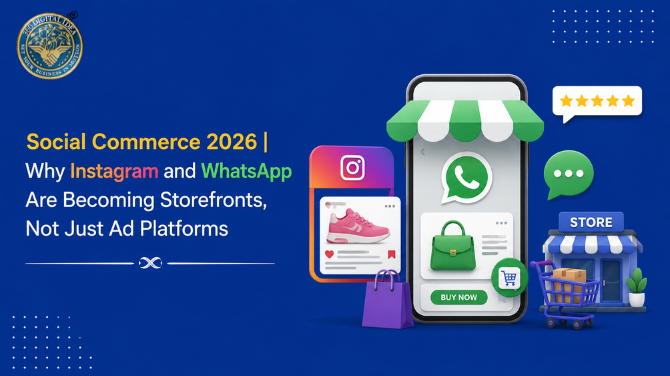
Your customer sees a product on Instagram, taps it, and buys it. No website. No checkout page. No second thought. That’s social commerce in 2026, and it’s already changing how Indian brands sell online.
So here’s the quick version. Instagram and WhatsApp aren’t just ad platforms anymore. People browse, chat, and pay right inside the app now. Brands that treat these apps like real stores are selling more than the ones still pushing everyone to a separate website.
What Does Social Commerce Actually Mean in 2026?
Social commerce is simple once you see it in action. A customer finds your product, asks a question, and pays, all without opening a browser. Instagram tags a product in a reel or a post, and the person buying it taps a couple of times and it’s done. WhatsApp works the same way. Someone scrolls your catalog, asks about sizing or delivery, and pays right there in the chat.
Old school social media marketing just sent people to your website through an ad. That’s not really how it works anymore. The app itself has become the shop.
Why Instagram Turned Into a Storefront?
Instagram added shopping tags, product stickers on reels and stories, and a proper checkout built right into the app. Over 2.1 billion people use Instagram every month, and around 70 percent of them shop on it too, according to numbers pulled together by Capital One Shopping. Most of the people following you are already shopping there. You just have to give them a way to buy.
Checkout on Instagram converts at about 2.1 percent on average, based on estimates from SQ Magazine. That’s lower than TikTok Shop, sure. But Instagram still wins on reach and trust, since Indian shoppers usually already follow the brands they buy from.
Why WhatsApp Turned Into a Storefront?

WhatsApp is basically the default messaging app in India, with more than 500 million Indian users on it. Meta’s own numbers, summed up by WizMessage, show over 200 million businesses use WhatsApp Business tools worldwide. About 5 million of those use the bigger, more advanced WhatsApp Business API.
A WhatsApp catalog means a customer can see everything you sell without downloading anything new. Research from Meetanshi shows over 40 million people browse business catalogs on WhatsApp every month. In India alone, around 15 million businesses already run a WhatsApp Business account, according to numbers reported by AiSensy.
Then there’s click to WhatsApp ads. Someone taps your Instagram or Facebook ad and it opens straight into a WhatsApp chat with you. No landing page. No form to fill out. The conversation itself is the funnel.
Real Case Study, Tata CLiQ on WhatsApp
Tata CLiQ, the ecommerce arm of the Tata Group, started out using the WhatsApp Business API just to send order updates and delivery info. Nothing fancy. But customers responded well to those plain updates, so Tata CLiQ took it further and started sending personalized offers and seasonal sale messages too.
WhatsApp marketing platform Zixflow published details on this campaign. They reported a 57 percent click through rate on those WhatsApp messages, along with a 10 times return on investment within a couple of months. Tata CLiQ later added automated cart recovery messages as well, nudging people who added something to their cart but never finished checking out.
Worth pointing out, this comes from a vendor’s own published report, not an independently audited study. So take the exact multiples with a pinch of salt. But the bigger point still holds up. People actually read WhatsApp messages, far more than they read emails. A brand that uses WhatsApp to sell, not just to answer support questions, can turn that attention into real money.
Hypothetical Example, A Small Ethnic Wear Brand
Say there’s a small label called Rima’s Closet, selling handloom sarees out of one studio in Jaipur. Rima has about 8,000 Instagram followers and a loyal customer base, but hardly anyone visits her website directly.
She tags every saree in her reels using Instagram Shopping, so anyone watching can tap the product right there. Her Instagram bio links to a WhatsApp catalog too, so people who want to ask about fabric or sizing can just message her instead of hunting through a website.
A follower messages her asking about a saree from a reel. Instead of typing out a long reply, Rima sends her WhatsApp catalog link. The customer picks the item, asks two quick questions about the blouse size, and pays through a UPI link Rima sends in the same chat. Start to finish, the whole thing happens without the customer ever leaving a messaging app.
Rima’s Closet isn’t a real business. It’s just an example. But it’s the kind of pattern showing up again and again with small Indian brands that mix Instagram for discovery and WhatsApp for the actual sale.
How to Start Turning Your Social Pages Into Storefronts?
You don’t need a huge budget to get started. Just focus on these first.
- Set up Instagram Shopping and tag every product in your posts, reels, and stories.
- Move off the free WhatsApp Business app and onto the API once your order volume gets too big for one phone to handle.
- Build a real WhatsApp catalog with good photos, clear prices, and delivery details, so people stop asking the same basic questions over and over.
- Run click to WhatsApp ads instead of ads that send people to a slow loading website.
- Watch how many chats actually turn into orders, not just how many people clicked.
Doing all five properly takes time and someone checking the numbers every week. That’s usually the difference between a storefront that just sits there and one that actually makes money.
Your Next Step
If you’re still using Instagram and WhatsApp just to post content or run the occasional ad, you’re leaving money on the table. Somewhere out there, a competitor is already tagging products in their reels and closing sales through a WhatsApp catalog while you’re reading this.
360 Digital Idea sets up and runs social storefronts for Indian brands. They handle everything from setting up Instagram Shopping the right way to running WhatsApp Business API campaigns that actually turn chats into orders. If you want a team that builds this properly and checks the numbers every month, take a look at their Social Media Management services, or their Social Media Advertising page if you also want click to WhatsApp ads running alongside your storefront. You can grab a free consultation through the 360 Digital Idea website too, and they’ll build a plan around your own products.
Frequently Asked Question
1. What is social commerce?
Social commerce is the process of discovering, exploring, and purchasing products directly within social media platforms like Instagram, Facebook, or WhatsApp. Customers can browse products, make purchase decisions, and complete transactions without leaving the app, creating a faster and more convenient shopping experience.
2. Is Instagram Shopping free to set up?
Yes. Instagram Shopping is free to set up. You only need a business account and a product catalog connected through Meta Commerce Manager. Costs only apply if you choose to promote your products using paid advertising.
3. How does a WhatsApp Business catalog work?
A WhatsApp Business catalog acts as a digital product showcase within your WhatsApp profile. It displays product images, descriptions, and prices, allowing customers to browse items and contact you directly. Orders, payment links, and customer conversations can all be managed within the same chat.
4. Do I need the WhatsApp Business API to sell products?
No. Small businesses can start selling using the free WhatsApp Business app. The WhatsApp Business API becomes useful when your business grows and requires features like automated messaging, multiple team members managing chats, CRM integration, and advanced customer support.
5. Is buying through Instagram or WhatsApp safe for customers?
Yes. Both Instagram and WhatsApp use Meta’s security infrastructure, and WhatsApp conversations are protected with end-to-end encryption. However, customers should always verify the seller’s credibility by checking reviews, ratings, and return policies before making a purchase.
6. Which platform converts better: Instagram or WhatsApp?
Both platforms serve different purposes. Instagram is ideal for product discovery through posts, reels, and ads, helping businesses reach new audiences. WhatsApp is more effective for converting interested buyers into customers through direct conversations, personalized support, and faster purchase decisions.
7. How much does the WhatsApp Business API cost in India?
The cost depends on your chosen WhatsApp Business Solution Provider and the number of conversations you send. Most businesses pay a monthly platform fee along with Meta’s conversation-based pricing. Marketing conversations generally cost a few rupees per message, while service conversations are often lower in cost and may be free when responding within Meta’s 24-hour customer service window.