Skip to content

Introduction
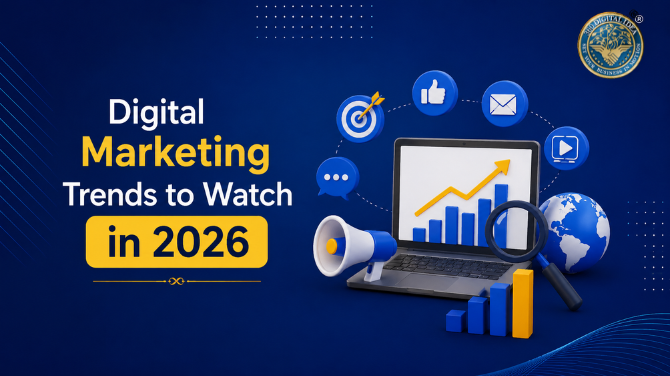
Digital marketing is changing faster than ever in 2026. Businesses that relied on traditional SEO, paid ads, or social media alone are now seeing different results as AI reshapes how people search and discover brands. Google AI Overviews, ChatGPT, Perplexity, and Gemini are changing user behavior, while customers expect more personalized experiences and authentic content.
The good news is that businesses don’t need to completely change their marketing strategy. Instead, they need to understand what’s changing and adapt accordingly. Below are the biggest digital marketing trends every business should know in 2026 and how to use them to stay ahead of the competition.
AI Search Is Changing How People Find Businesses
One of the biggest changes in 2026 is the rise of AI-powered search. Instead of clicking multiple websites, users often get direct answers from Google AI Overviews or AI assistants like ChatGPT and Perplexity.
This means ranking #1 on Google no longer guarantees website traffic. Today, your content also needs to be structured so AI tools can understand and reference it.
Businesses should focus on:
- Writing clear and direct answers.
- Adding FAQ sections.
- Using Schema Markup.
- Publishing fact-based content.
- Updating pages regularly.
The easier your content is to understand, the more likely AI platforms are to recommend it.
AEO and GEO Are Becoming Essential
Traditional SEO is no longer enough on its own.
Answer Engine Optimization (AEO)
AEO focuses on creating content that AI tools can easily use when answering user questions. This includes concise explanations, structured headings, FAQs, and schema markup.
Generative Engine Optimization (GEO)
GEO focuses on improving your brand’s authority across the web. AI platforms are more likely to recommend businesses that receive positive reviews, quality backlinks, industry mentions, and trusted citations.
Many businesses are still focusing only on SEO, making this an excellent opportunity to gain a competitive advantage.
AI Is Becoming Part of Everyday Marketing
AI is no longer just an experimental technology—it has become a regular part of modern marketing.
Businesses now use AI for:
- Content research
- Blog outlines
- Ad copy variations
- Email marketing
- Audience analysis
- Campaign optimization
However, successful businesses don’t publish AI-generated content without review.
Instead, they use AI to speed up the process while human writers improve accuracy, add real experience, and create content that feels natural rather than robotic.
Short Videos Continue to Dominate
People are discovering brands through short-form videos before they search on Google.
Platforms such as:
- Instagram Reels
- YouTube Shorts
- Facebook Reels
- LinkedIn Videos
have become powerful channels for attracting new customers.
Instead of creating expensive promotional videos, businesses are seeing better engagement with simple content such as:
- Behind-the-scenes clips
- Customer success stories
- Product demonstrations
- Industry tips
- Frequently asked questions
Consistency matters much more than perfection.
Personalized Marketing Drives Better Results

Customers expect businesses to understand their interests and preferences.
Rather than sending the same message to everyone, businesses should segment their audience based on:
- Previous purchases
- Browsing history
- Location
- Interests
- Customer behavior
Even simple personalization can improve engagement, increase conversions, and strengthen customer relationships.
Trust Has Become a Major Ranking Factor
Both users and AI search engines prefer trustworthy businesses.
Building trust now involves more than simply publishing content.
Businesses should:
- Publish original content.
- Share real case studies.
- Display genuine customer reviews.
- Use named authors.
- Keep statistics and information updated.
- Earn backlinks from reputable websites.
Google’s E-E-A-T principles (Experience, Expertise, Authoritativeness, and Trustworthiness) continue to play a significant role in improving search visibility.
Data-Driven Marketing Is More Important Than Ever
Successful businesses don’t rely on assumptions.
Instead, they regularly measure:
- Organic traffic
- Conversion rates
- Cost per lead
- Customer acquisition cost
- Return on investment
- User engagement
Using analytics helps businesses identify what works, eliminate ineffective campaigns, and invest in strategies that produce measurable results.
Where Should Businesses Focus in 2026?
Digital marketing offers many opportunities, but businesses don’t need to implement everything at once.
For most small and medium-sized businesses, the highest priorities should be:
- Improve website SEO and technical performance.
- Optimize content for AI search (AEO).
- Build online authority through GEO.
- Publish consistent short-form video content.
- Personalize customer communication.
- Monitor campaign performance using analytics.
Taking steady, consistent action often produces better results than trying to overhaul every marketing channel at once.
What Should You Do Next?
Start by evaluating your current online presence.
Search for your business name and primary services on Google, ChatGPT, and Perplexity. See whether your business appears and compare your visibility with competitors.
Next:
- Add FAQs to important service pages.
- Implement Schema Markup.
- Refresh outdated content.
- Publish one helpful blog each month.
- Share one or two short videos every week.
- Encourage satisfied customers to leave reviews.
Small improvements made consistently can significantly improve your visibility over time.Frequently Asked Questions (FAQs
Conclusion
Digital marketing in 2026 is no longer just about ranking on Google or running paid ads. Success now depends on creating helpful content, building trust, optimizing for AI search, producing engaging video content, and understanding your audience.
Businesses that adapt to these changes early will build stronger online visibility, attract better-quality leads, and stay ahead of competitors. Rather than chasing every new trend, focus on strategies that provide long-term value and continuously improve your digital presence.
Frequently Asked Questions (FAQs)
Q1. Is traditional SEO still important in 2026?
Answer:
Yes, traditional SEO is still the foundation of online visibility. Optimizing your website, improving technical SEO, creating high-quality content, and earning authoritative backlinks remain essential for better search rankings. However, in 2026, SEO works best when combined with Answer Engine Optimization (AEO) and Generative Engine Optimization (GEO), helping your business appear in both Google search results and AI-generated answers.
Q2. What is the difference between AEO and GEO?
Answer:
AEO (Answer Engine Optimization) focuses on creating content that provides clear, direct answers to users’ questions. This helps AI-powered search tools like Google AI Overviews and voice assistants easily understand and display your content.
GEO (Generative Engine Optimization) focuses on building your brand’s authority across the internet through quality backlinks, customer reviews, media mentions, and trusted citations, increasing the chances of AI platforms recommending your business.
Q3. Should small businesses optimize for AI search?
Answer:
Yes. AI-powered search is becoming an important part of how people discover businesses online. Since many small businesses have not yet optimized their websites for AI search, starting now gives you an opportunity to gain a competitive advantage and improve your visibility before the competition increases.
Q4. Is AI replacing digital marketers?
Answer:
No. AI is a powerful tool that helps with research, content creation, campaign optimization, and data analysis, but it cannot replace human creativity, strategic thinking, or business experience. The most successful marketing strategies combine AI efficiency with human expertise to create authentic, high-quality content and better customer experiences.
Q5. Which digital marketing trends should businesses prioritize in 2026?
Answer:
Businesses should focus on improving their website’s SEO, optimizing content for AI search using AEO and GEO, publishing helpful and informative content, creating consistent short-form videos, and building trust through customer reviews and real-world experience. These strategies provide sustainable growth, stronger online visibility, and better long-term marketing results.